News
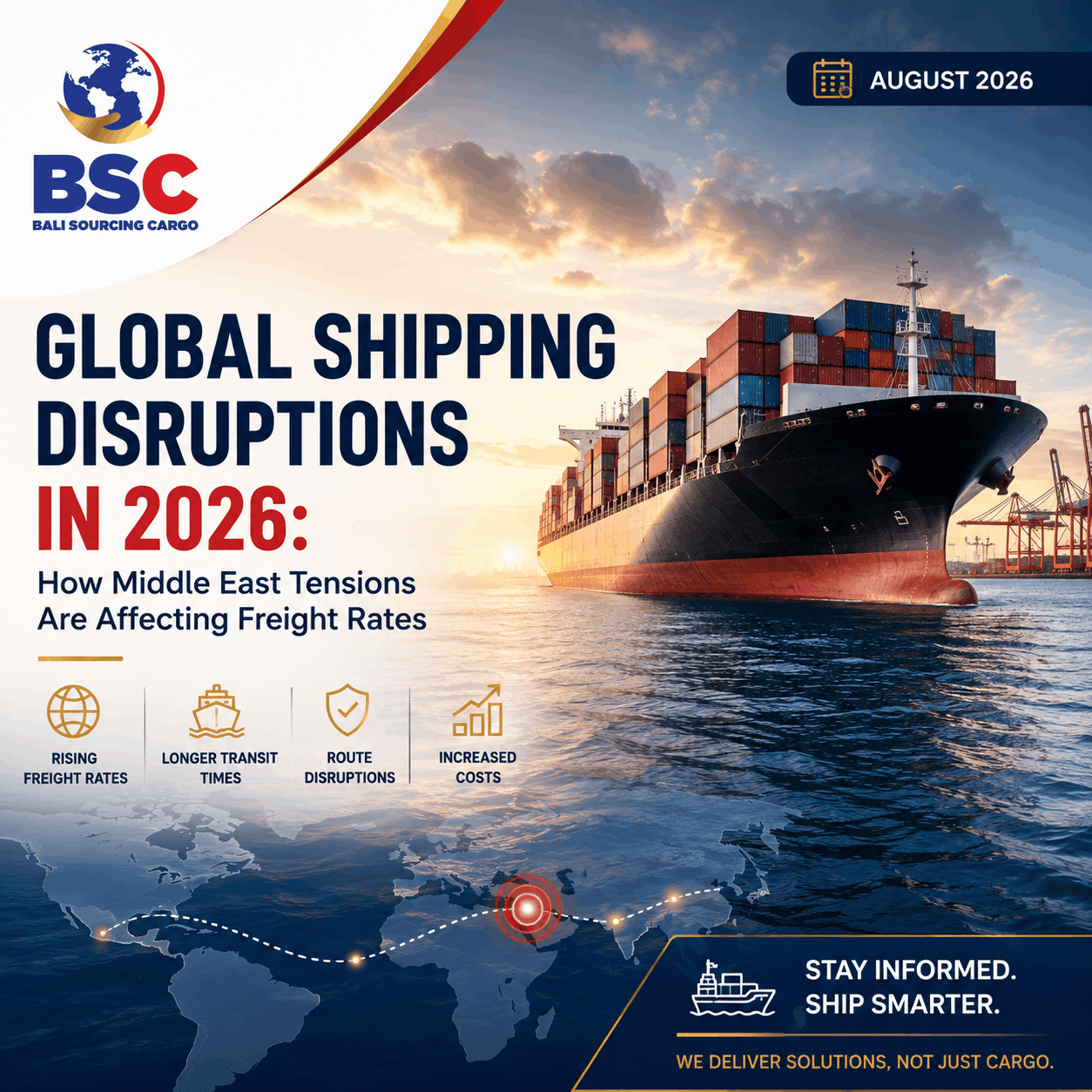
Global Shipping Disruptions in 2026: How Middle East Tensions Are Affecting Freight Rates
Global shipping is facing continued uncertainty in 2026 as tensions in the Middle East disrupt important maritime routes and affect freight rates, vessel schedules, and transit times.
For businesses importing and exporting goods, these changes can have a direct impact on shipping costs and delivery schedules.
How Middle East Tensions Are Affecting Shipping
The Middle East is home to several critical shipping routes, including the Strait of Hormuz and routes connecting Asia with Europe.
When vessels need to avoid certain areas or take longer routes, shipping companies can face higher fuel, insurance, and operating costs. These additional costs can eventually affect freight rates for businesses around the world.
Recent developments have already had a significant financial impact on major carriers. Hapag-Lloyd reported approximately US$600 million in additional costs during Q2 2026 linked to the Middle East crisis.
What Does This Mean for Freight Rates?
Freight rates can become more volatile when shipping capacity and vessel routes are disrupted.
However, rates do not necessarily increase on every route. Demand, available vessel capacity, fuel costs, and individual trade lanes all influence the final price.
For exporters, this means that an old shipping quotation may no longer reflect the current market. Getting an updated freight quotation before booking is increasingly important.
What Does This Mean for Exporters from Bali?
Businesses shipping furniture, handicrafts, home décor, textiles, and other products from Bali may experience:
- Changes in freight rates
- Longer or less predictable transit times
- Changes in vessel schedules
- Limited space during periods of high demand
Planning shipments early and comparing available shipping options can help reduce unexpected costs and delays.
How Can You Reduce the Impact?
Businesses can take several practical steps:
- Request updated freight rates before booking.
- Plan container shipments in advance.
- Optimize packing to maximize container space.
- Compare LCL and FCL options.
- Allow extra time for possible delays.
- Work with an experienced freight forwarder.
Conclusion
Global shipping conditions remain unpredictable in 2026, and developments in the Middle East can affect freight rates and shipping schedules far beyond the region itself.
For exporters from Bali, staying informed and planning shipments carefully can help control costs and reduce the risk of unexpected delays.
At Bali Sourcing Cargo, we help businesses arrange international shipments from Bali and find suitable shipping solutions based on cargo volume, destination, and current freight conditions.